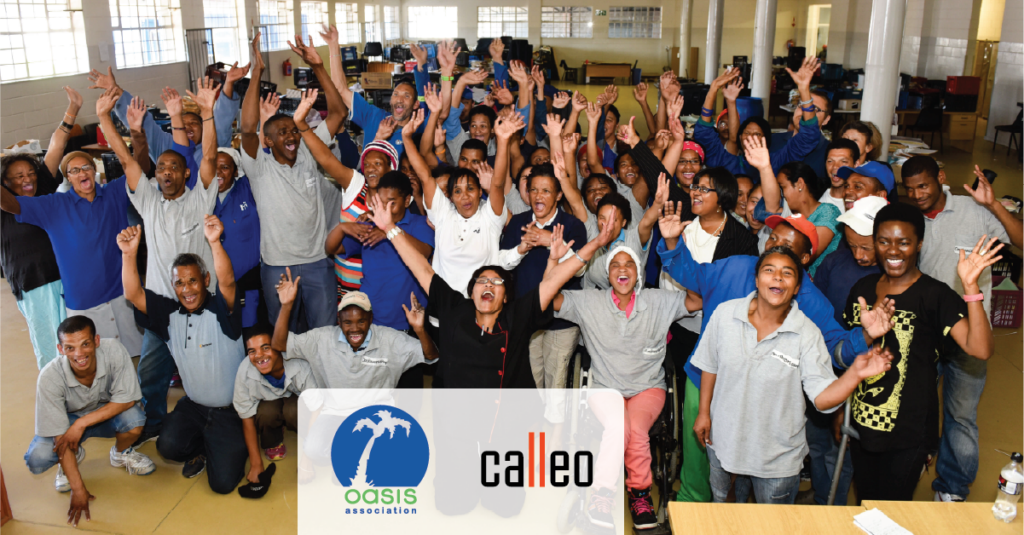
Roughly one in ten people lives with an intellectual disability. Four in every thousand fall into the moderate, severe or profound categories, this is the group that Oasis Association exists to serve.
For over six decades, this Cape Town-based non-profit organisation has been doing the quiet, unglamorous work of helping people with intellectual disabilities live with as much independence, safety and dignity as possible. Gail Bester, Director of Oasis Association, shared what the work in fact looks like and where support is needed most.
Ask Gail to describe Oasis’ mission in plain terms, and she doesn’t reach for a slogan. “Oasis’ mission is to provide as many developmental opportunities as we can to optimise each intellectually disabled individual’s potential,” she says. The advocacy side runs largely through a collective and a forum: the Western Cape Forum for Intellectual Disability.
What makes the work distinctive is how it defines success. Intellectual disability is a lifelong condition that begins before the age of eighteen, which shapes everything from communication to self-care and independent living. It’s important to know that it presents differently for every person. So “reaching one’s fullest potential” is not a single bar everyone clears.
For some beneficiaries, progress looks like workplace skills, longer concentration spans, or growing confidence in communication. For others, particularly those with severe or profound intellectual disabilities, it’s smaller, equally meaningful milestones: learning to feed themselves, using the toilet independently or simply greeting someone and taking part in an activity. “Their fullest potential should not be measured against what others are able to achieve,” Gail says. “It is about helping one and all to develop their own abilities, independence and confidence as far as possible, while providing the care and support they need.”
Every weekday, Oasis’ drivers collect beneficiaries from their homes or from a central pickup point to take them to one of several settings: a protective workshop where they’re employed, an Oasis Day centre for children with severe to profound disability, or one of the organisation’s group homes. Around ten percent of the people Oasis supports (some 30 to 40 individuals) live in these affordable and supervised living arrangements. They’re driven to their workshop each morning and brought home, and it’s a logistics operation as much as one of care, and that’s where some of the least visible pressure sits.
Gail is candid about what running Oasis really involves day to day. Transport is a constant strain: this year alone, one vehicle was hijacked and stolen, and windscreens have been smashed by vandals stoning vehicles on three separate occasions, in addition to the routine cost of keeping a fleet roadworthy. Good drivers are hard to find and harder to keep. Beyond the road, there’s the physical footprint of the organisation itself. Oasis owns seven properties outright, but several are ageing and need attention: painting, damp-proofing, window repairs, and the general upkeep of buildings and grounds. “Funding made available for that would certainly help us to ensure that our services are available for a long time to come,” Gail notes.
Not everything about the work is a hard number, though. Gail points to a recent moment that stuck with her: the admission of three new residents to one of Oasis’ homes. Beyond the direct care to the residents themselves, she was reminded of a quieter service Oasis provides: relief and peace of mind for families, often ageing parents, who have spent years worrying about what happens to their son or daughter when they can no longer provide care themselves. “Oasis provides a solution,” she simply says.
It’s also an answer to what Gail calls the most damaging misconception we harbour: that people with intellectual disabilities don’t have the same right to dignity, opportunity and, where needed, supervised care as anyone else. A related, more specific myth she hears often is that Oasis’ beneficiaries are aggressive. “It couldn’t be further from the truth,” she says.
As Gail puts it: “Being of sound intellect is a real privilege.”
How you can help
Gail is specific about where support currently matters most:
Get involved: Oasis Charity Shops Claremont — Corner of Lee and Imam Haron Road | Mon–Fri 8:30am–4pm, Sat 8:30am–1pm
Oasis Charity Shops Fish Hoek — Somerset House, 6 Recreation Road | Mon–Fri 8:30am–4pm, Sat 8:30am–1pm
Website: www.oasis.org.za Email: info@oasis.org.za Facebook: Oasis Charity Shops CT Instagram: @oasischarityshopscapetown

Tailored B2B information solutions. We collect and integrate vital intelligence, empowering your growth strategies and competitive edge. Accelerate your pathway to success.