This article was written by Silvia Baur-Yazbeck, Financial Sector Specialist and Ghada Elabed, Senior Agriculture Economist. The original article was published by CGAP. You can find the article here.
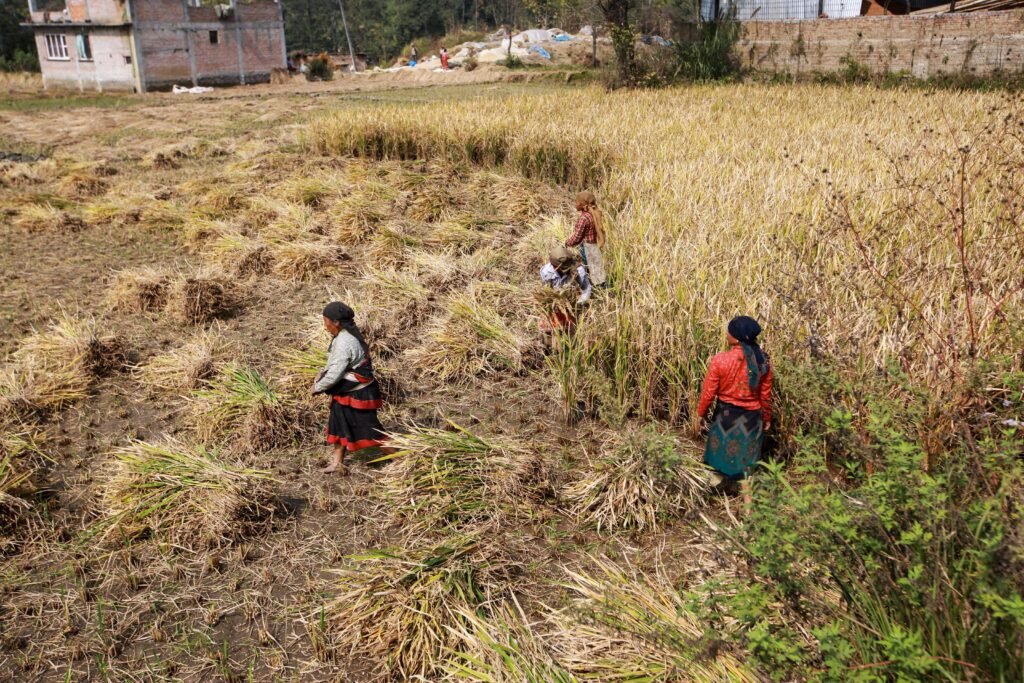
In Sub-Saharan Africa, women make up over 40% of the labor force in agricultural production. Despite playing a key role in agricultural systems and rural communities, rural women face more barriers than men to increase their productivity and resilience. Accessing the right inputs and information, markets to sell their goods, and finance to grow their rural businesses are key enablers for agricultural growth – and are made challenging for women by gender norms, connectivity issues, and literacy barriers.
The stakes are high. In Sub-Saharan Africa, where agriculture remains the primary source of income for rural households, the gap between women’s labor contribution and their access to productive resources is not just an equity issue – it’s a drag on overall agricultural output.
Rural, community-led cooperatives, such as savings and credit cooperative organizations (SACCOs) and farmer producer organizations (FPOs), can address many of these barriers, but only if they are set up to provide relevant and reliable services to their members.
Let’s take the example of Mildred and Cheptoo, two smallholder farmers in Kenya. Both are members of a dairy cooperative where they sell their milk, and Cheptoo is a member of a SACCO.
SACCOs in Kenya are locally-organized and -led financial services providers (FSPs) through which small-scale producers like Mildred and Cheptoo can save money, access credit, and take leadership in stewarding management of the group. SACCOs are more accessible compared to other FSPs because they accept alternative forms of collateral and use group guarantees, which matters particularly for women, who often have limited assets.
Mildred, for example, was able to join and borrow from Cheptoo’s SACCO by leveraging her friend’s longstanding relationship and good repayment performance. More recently, Cheptoo’s SACCO started collaborating with her dairy cooperative, offering milk payments directly into her SACCO account, more favorable loan terms, and the option to deduct loan payments and savings from her milk proceeds. Through partnerships with FPOs, agtechs, and agripreneurs, SACCOs can connect farmers to other products and services, like inputs, extension services, and markets.
For Mildred and Cheptoo, these links between savings, credit, and farming are not abstract. Mildred, who first relied on Cheptoo’s guarantee to join the SACCO, was able to access her first formal loan within two seasons and use it to purchase certified seeds, helping improve her milk yields. Cheptoo chairs the FPO’s women’s committee. Their experiences show what is possible when cooperatives work together, but also how far this opportunity still is from being universal.
The Building Rural Incomes through Digital, Gender-Equitable SACCOs and FPOs (BRIDGES) project—a collaboration between the World Bank, Dalberg, and CGAP—supports the Government of Kenya’s National Agricultural Value Chain Development Project and Food Systems Resilience Program in their efforts to strengthen rural cooperatives across the country. This includes activities to enhance their governance structures, build their bookkeeping and management capacities, digitize their records and processes, introduce digital payments, and develop products tailored for rural women.
In 2025, BRIDGES collaborated with 60 Decibels to survey 463 members of newly digitized rural SACCOs. The findings underscore the importance of SACCOs to rural finance in Kenya. Among the participants, SACCO membership was nearly universal: 81% of women and 79% of men saved through a SACCO. Yet access to credit was unequal. Only 48% of women borrowed from their SACCO, compared with 53% of men, showing that savings alone do not automatically translate into productive investment for women due to persisting social and structural barriers.
The study also showed why linking SACCOs with FPOs matters. Farmers who belonged to both were more likely to diversify their income sources than those with SACCO membership alone (78% versus 68%). Women with dual membership also reported greater decision-making power over household finances and within their cooperatives. For women like Mildred and Cheptoo, these links can turn cooperative membership into stronger networks, greater leadership opportunities, and more influence over financial decisions.
Our research and Mildred and Cheptoo’s stories show what is possible when cooperatives connect savings, credit, inputs, markets, and income. SACCOs and FPOs can also be an important bridge, linking smaller, locally-led savings and loans associations (VSLAs) to larger loans, agricultural information, market linkages, and other services. To play this role effectively—and attract private sector investment—they need reliable, accessible data on members’ transactions and productive activities.
The message is clear: cooperatives can expand rural women’s access to finance, services, and voice, but only if they are well governed, financially sound, and equipped to serve members reliably.
Digitizing rural cooperatives’ processes and transactions is therefore not only about financial inclusion; it also supports food security, jobs, and climate resilience. BRIDGES is one part of this wider effort, helping to show how governance, digitization, and gender inclusion can reinforce one another in Kenya and beyond.
Join CGAP on the journey and follow our subsequent blogs, which will dive deeper into learnings from strengthening rural cooperatives through digitization, training, and consolidation, and creating an entry point for the private sector to invest in key agricultural value chains.

Tailored B2B information solutions. We collect and integrate vital intelligence, empowering your growth strategies and competitive edge. Accelerate your pathway to success.