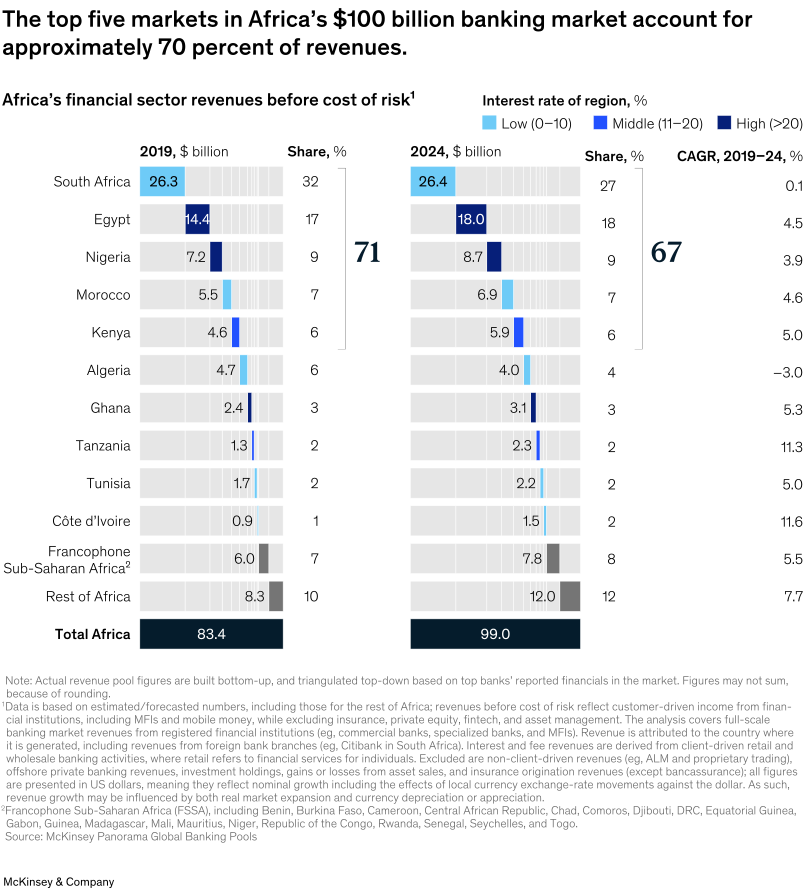
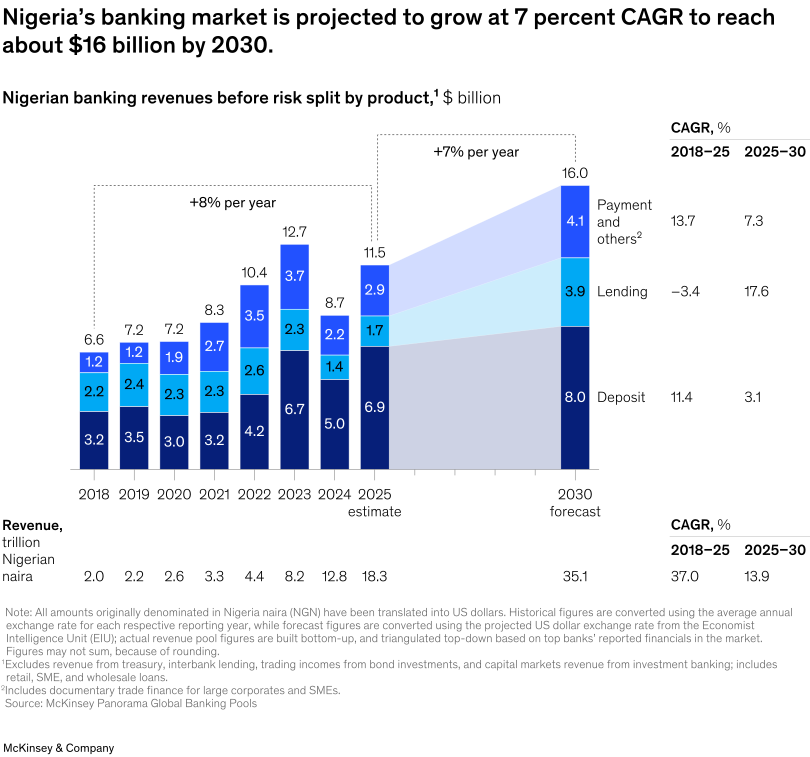
Between 2019 and 2024, corporate banking accounted for the largest share of new revenue growth in Nigeria’s banking sector; however, the retail and SME segments grew faster, leveraging digital payments and agency banking to capture previously untapped markets.
While the Nigerian market is less concentrated than some, consolidation is increasing. Between 2019 and 2024, the top banks increased their domestic asset share from 59 percent to 64 percent.
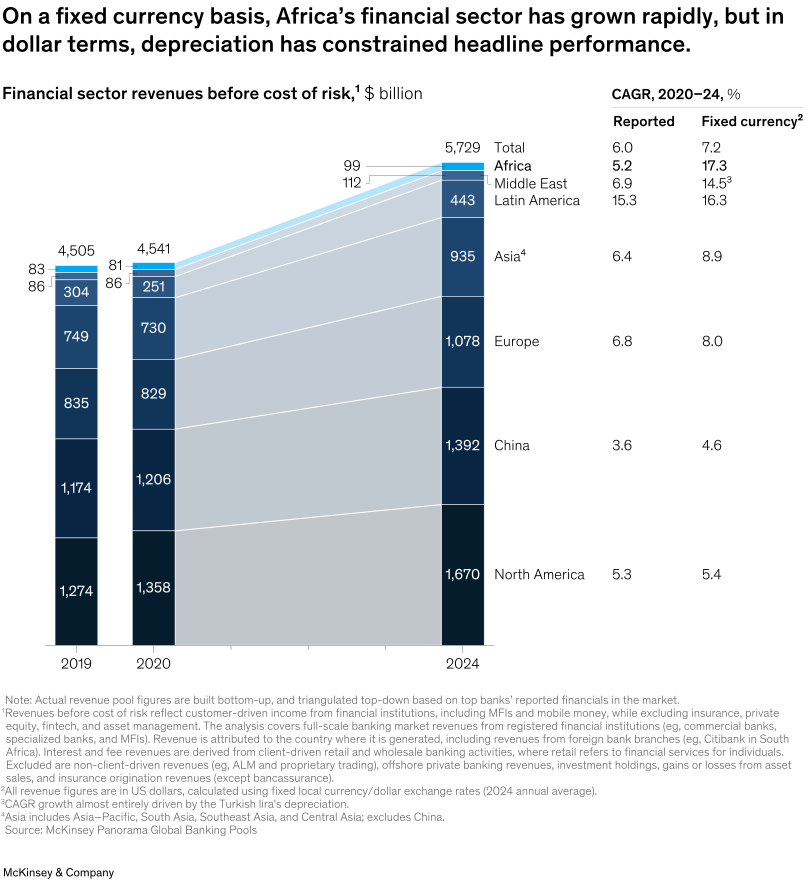
The Nigerian banking sector over the past five years has been affected by macroeconomic shocks, increased regulation, and the maturation of digital disruption. A weaker local currency has driven a revenue drop in dollar terms, but top banks are mitigating this by expanding into new markets, with, for example, Access Bank’s foreign operations now accounting for 23 percent of the bank’s total operating income. In 2023, following the liberalization of Nigeria’s foreign exchange market, the top five banks by market share recorded over $1.7 billion in foreign exchange gains, representing about 40 percent of their total operating income—100 times the exchange gains in 2022. For several banks, this exceeded their operating income from the previous year. At the same time, devaluation and high interest rates led to a 57 percent annual increase in stage 3 nonperforming loans (NPLs) between 2022 and 2024.
In response, the government introduced a 70 percent retrospective levy on realized foreign exchange gains, encouraging banks to focus on sustainable service offerings. Additionally, the central bank has significantly raised capital requirements from $33 million (50 billion naira) to $330 million (500 billion naira) for international banks, and from $16 million (25 billion naira) to $130 million (200 billion naira) for national banks by March 2026 and halted capital distributions for banks under forbearance to strengthen balance sheets and build resilience in the sector.
A key feature of the landscape has been the evolution of fintechs like OPay and Moniepoint into major players that now rival traditional banks. OPay has surpassed 50 million downloads on the Google Play store, while Moniepoint ranks among the leading merchant acquirers, rivaling traditional banks in user adoption. Both companies offer savings wallets, debit cards, and business tools, building attractive ecosystems where individuals, agents, and SMEs alike want to stay. Traditional banks are responding by investing heavily in IT and digital in response. Recent filings show tens of billions of naira per bank per year in software additions and IT/e-banking expenses.
To navigate this dynamic and shifting environment, Nigerian banks are building reliability and scale, and embracing the digital reality to reach new consumers, notably young, digitally native Nigerians and micro-, small, and medium-size enterprises (MSMEs). In this context, there are three key areas of opportunity.
Nigerian banking faces a pivotal moment of consolidation and financial discipline. The Central Bank of Nigeria’s March 2024 decision to increase capital requirements, alongside equity raises and license changes, is driving consolidation through mergers and acquisitions, such as the merger between Unity Bank and Providus Bank. To build resilience, banks can consider merging with smaller, undercapitalized players to achieve synergies and align risk profiles. This strategy could boost earnings and internal capital generation, ultimately enabling entities to seize growth opportunities while ensuring compliance in a shifting regulatory framework.
The Nigeria Open Banking Framework could end the era of siloed financial data, effectively shifting control of financial data from banks to consumers, enabling consumers to decide how, when, and with whom their data is shared. This is likely to unlock a wave of integrated products from nonbank competitors.
In this new digital future, the competition to serve young, mobile-first customers will likely intensify. Nigeria’s large, young population—over 60 percent of whom are under 25—is already online, with more than 160 million active internet subscriptions. Banks could prepare for the operational transformation required to operate in this new environment by establishing integrated, data-driven digital ecosystems that capture and deepen customer relationships at scale. They could do this by enhancing their API capabilities and integrating with fintech, e-commerce, and telco platforms to develop mobile-first, all-in-one platforms with seamless user experiences.
A solid technological foundation could also deliver the personalization and profitability required to successfully capture growth opportunities within the highly lucrative, but untapped, MSME segment. Agile fintechs have been first movers in this space, but traditional banks can invest in digital platforms and build the capabilities to use transactional data for automated, efficient credit decisions and unlock the speed and personalization required to profitably serve this segment. They can also collaborate with fintechs and digital platforms to access data, broaden their reach, and offer tailored learning solutions.
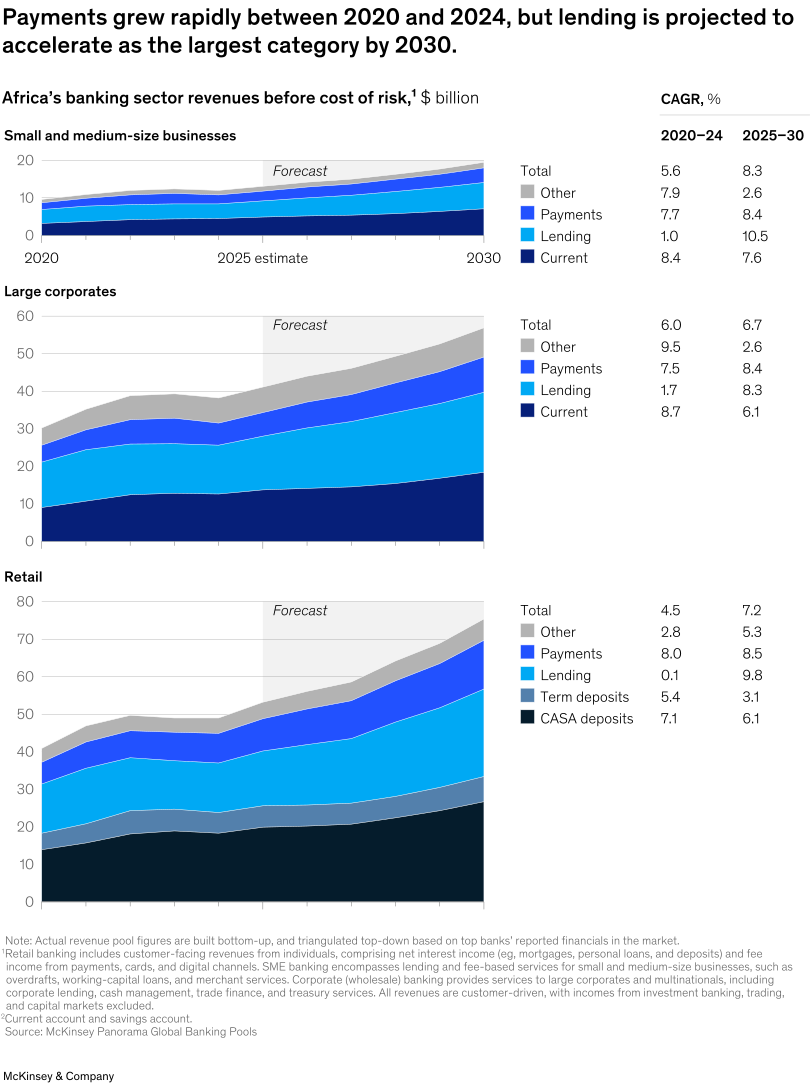
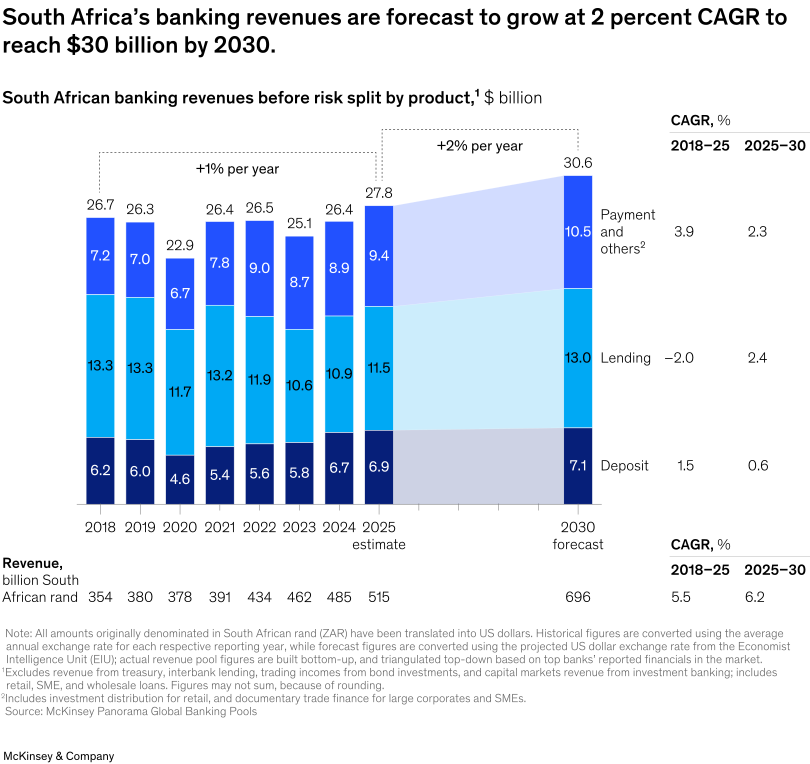
South Africa’s banking sector is recovering well from the challenges of COVID-19. Client-driven revenues have grown consistently at 4 percent annually since 2020—above the GDP growth rate—and are forecast to reach $31 billion by 2030 (Exhibit 13). Despite a slight downturn over the past five years, lending is expected to remain the primary engine of growth, with other services, such as payments, also expected to contribute more strongly in the future. The sector’s resilience is anchored in a highly concentrated market, with the top four banks—Standard Bank, FirstRand, Absa, and Nedbank—accounting for roughly 82 percent of domestic assets, although specialized players such as Investec and Capitec have gained market share.
Key shifts that have shaped the South African banking market
A weaker currency through to 2024, muted GDP growth, and rising competition from nontraditional financial service providers over the past five years have been pushing South African banks to adopt innovative growth strategies. Banks have been optimizing operations and diversifying revenue streams, both within South Africa by increasing fee generation, and beyond South Africa’s borders by expanding into new markets.
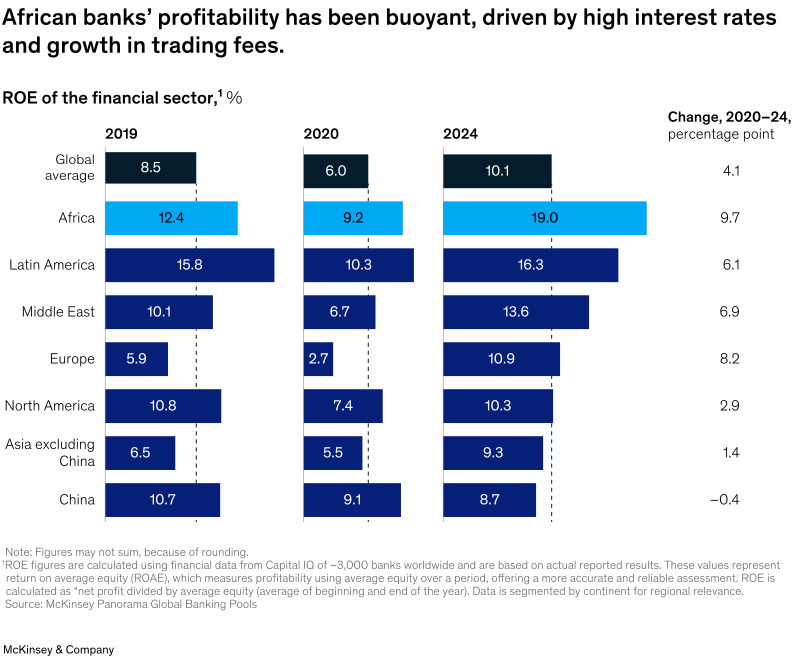
Some specialized players like Capitec are seeing notable results. By prioritizing digital transformation to improve efficiency and expanding value-added service fees to diversify its domestic revenues, Capitec almost doubled its client base between 2019 and 2024 and achieved an ROE exceeding 25 percent. Capitec also outperformed the sector as a whole, growing by 18 percent between 2019 and 2024, compared with 4 to 6 percent growth for other top banks.
Outlook to 2030: Opportunities in gen AI, ecosystem primacy, and digital agility
Looking ahead, improved GDP growth and declining money market rates are expected to drive income growth and reduce provisioning in the South African market, although necessary technology investments may increase technology and service costs.
In this context, three core themes are likely to shape the evolution of South African banking and offer a clear playbook for success in this market.
AI-native operating economics
South African banks, particularly large incumbents, are moving AI from early experimentation toward scaled, enterprise-level programs to reduce costs, accelerate decision-making, and unlock new revenue streams. Recent regulatory and industry studies show that many institutions have deployed AI in key areas such as fraud detection, credit and risk processes, customer service, and sales and marketing, and are now investing to scale these capabilities from fragmented pilots into groupwide initiatives that deliver measurable value. Banks are increasingly focused on embedding AI into core processes, strengthening data and technology foundations, and aligning governance, talent, and operating models to ensure AI drives sustainable productivity gains, improved risk outcomes, and meaningful financial impact across the enterprise.
To help them succeed in the future, banks could prioritize AI adoption to automate decisions, optimize their business, and speed up lending decisions for customers and SMEs. Crucially, this advanced automation will need to be secure and compliant, with embedded explainability and Protection of Personal Information Act (POPIA)‒grade consent across credit, collections, and fraud models. By becoming more efficient, banks can successfully reinvest capital into high-growth, fee-based businesses like trade, cash management, and wealth services.
The race for ecosystem primacy
Embracing ecosystem partnerships to meet customers where they already spend time, such as in retail aisles, super-apps, or wellness platforms, to build a dominant, integrated, and trusted position within the market will likely deliver a competitive advantage to banks. The South African Reserve Bank’s embrace of data-driven, app-based underwriting has allowed new entrants to compete directly with traditional banks using their unique ecosystem data. For example, Discovery Bank (a fully digital, shared-value bank that rewards clients for good financial behavior through personalized features and discounts) has integrated its banking and insurance services, directly linking data from its sister company, Discovery Health’s wellness rewards, to deposit rates and credit pricing; while Vodacom’s Airtime Advance allows prepaid customers to borrow small amounts, secured against future airtime top-ups. Neobanks, like TymeBank, meanwhile, are reshaping mass-market banking by leveraging national retail partners to run over 1,000 in-store onboarding kiosks and around 15,000 retail points. This has enabled a low-cost, digital-first funnel where, according to the bank, about 85 percent of new accounts are opened at kiosks, helping TymeBank pass 10 million customers in 2024.
By mastering shared liability and collecting data from users or devices with their explicit permission, banks can improve pricing and approval processes, offering customers a seamless experience in which core banking services—payments, lending, investments, and even nonfinancial services—are interconnected. This deeper integration can drive engagement, customer loyalty, and higher profitability. The next strategic step could be to deploy embedded-finance tool kits—from digital cards and wallets to working capital—across major retail and insurance partnerships.
Operating like a software company
The shift to digital is driving players to act more like software companies, releasing new features every week and continuously simplifying their product offerings. In the market we serve, we see frontrunners are setting up dedicated digital teams and modernizing their core platforms with cloud-native technology and reliable APIs. This agile operating cadence lowers the cost-to-serve, improves customer experience, and provides a crucial competitive edge.
By continually issuing new features faster, cutting low-performing products, or modernizing legacy systems, banks can build more agile operating models that boost customer conversions and revenue while keeping costs low. This approach could include simplifying operations and reducing expenses across the board. The players that can launch updates in days, not months, are likely to thrive in this fast-paced environment.
Six emerging themes to guide a new era of African banking
The story of African banking is no longer just one of emerging potential, but of proven performance, innovation, and resilience, creating a solid base from which to build toward 2030. Nevertheless, the evolving African banking sector requires that banks adapt their strategies for long-term growth amid intensifying competition and economic volatility. Insights from our deep dive into Africa’s five largest banking markets suggest the next wave of evolution—and the path to defining success beyond the current rate cycle—will be driven by six emerging themes.
1. A two-speed reset: Protect returns for real value
Africa is operating on a two-speed economic track. While countries like Morocco have largely stabilized and avoided major currency challenges, Sub-Saharan Africa continues to grapple with persistent inflation and currency pressure, affecting credit demand and provisioning needs. In response, we observe that regulators in high-inflation markets are simultaneously tightening prudential standards and encouraging consolidation to strengthen the system’s resilience, while also advancing pro-innovation frameworks for open banking and fintech to boost competition. The banks most likely to succeed will be those that effectively price currency risk, manage sovereign exposure, and secure hard-currency liquidity. Returns can be protected by diversifying sources of funding, ensuring that local profitability converts to a durable value.
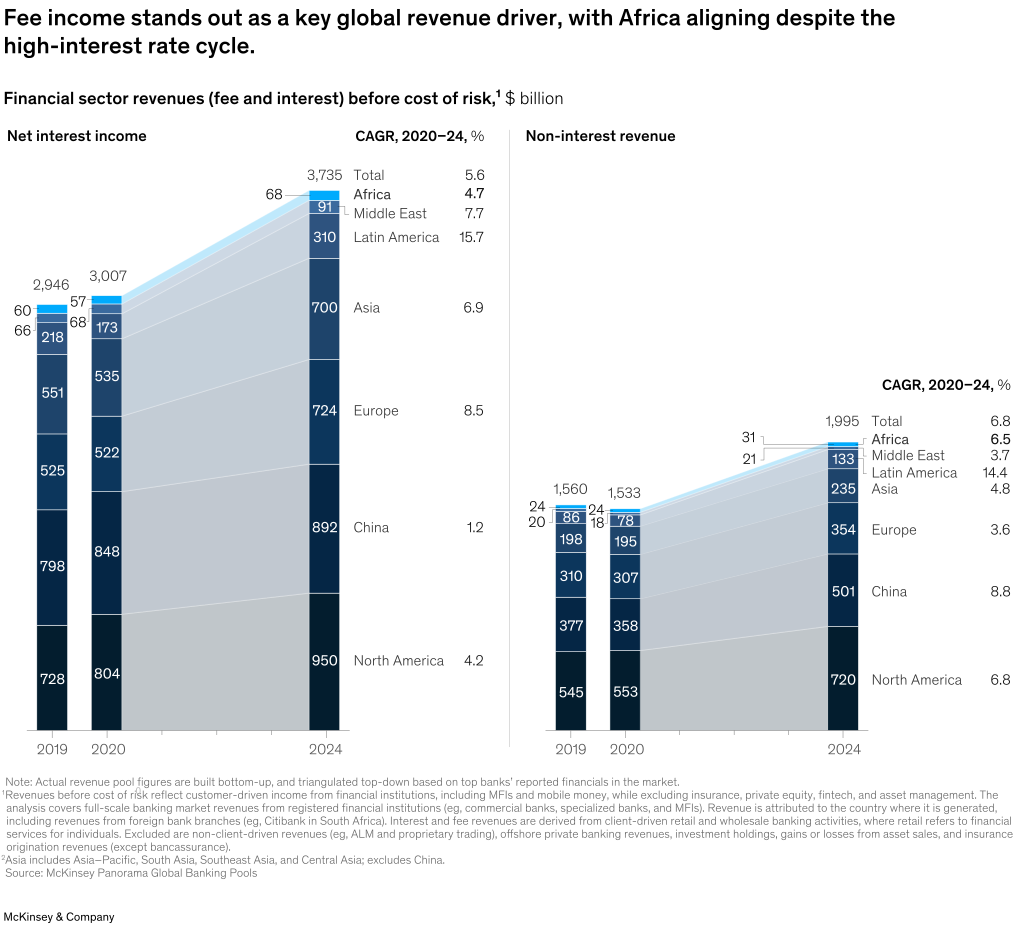
2. A tilt toward non-interest revenue: Shift the mix to fees
To protect earnings from volatile interest rate cycles, banks are shifting their focus to stable fee income from services like payments, cards, wealth, and insurance. This reduces their sensitivity to interest rate changes and minimizes their reliance on profits derived from lending as interest rate tailwinds fade. Since instant payment technologies are increasing competition on fees and making individual transactions less profitable, banks can respond by focusing on increasing customer usage and offering value-based bundles to protect their economics and deepen customer engagement. Additionally, cross-border and corporate cash flow services are becoming primary anchors for reliable, sticky fee growth.
3. Scale and consolidation: Scale only where unit economics improve and optimize capital
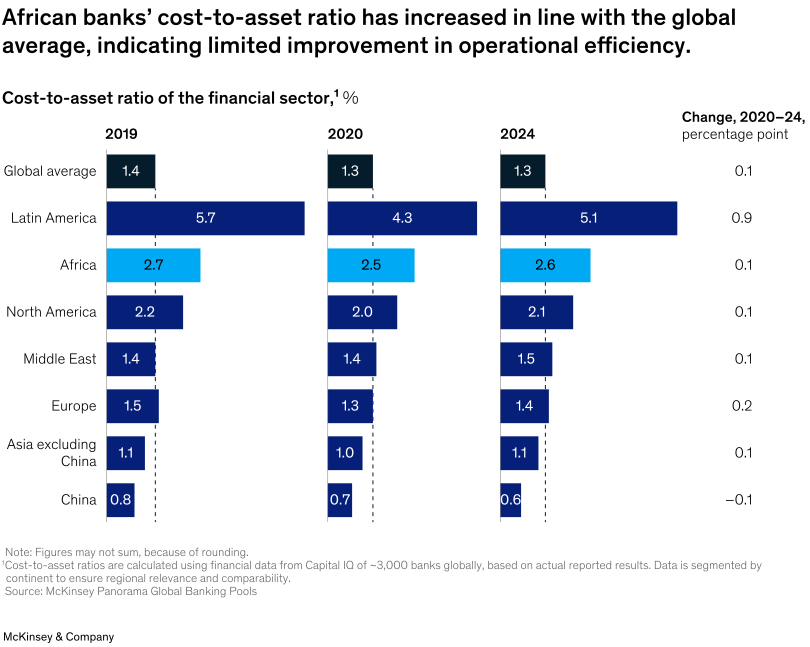
Banks are actively pursuing mergers and acquisitions and cross-border expansion to achieve scale and compete with agile fintechs, telcos, and neobanks. Many central banks support this consolidation by raising minimum capital requirements, effectively pushing banks toward mergers that create fewer, stronger institutions. Consolidation also targets efficiency by removing duplicate branches, operations, and technologies to reduce the cost-to-income ratio and free up capital.
The successful players of the future are likely to be those that scale selectively, simplify products, and digitize operations, while vigorously pursuing operational efficiency. Additionally, expanding across borders can help reduce exposure to exchange-rate fluctuations and uneven growth, helping to smooth earnings volatility. As nontraditional competitors expand into deposits, credit, and insurance, banks can partner with, white-label, or acquire these entities when collaboration yields better unit economics.
4. New capabilities: Industrialize AI, starting with costs while strengthening the foundations
To compete in a rapidly digitizing market, banks are likely to need stronger data foundations to replace outdated legacy systems and allow for better customer insights and increased operational efficiency. However, these need not be fully resolved before scaling AI. Open banking and APIs are reshaping distribution, enabling banks to embed products directly into telco and retail platforms and lower customer acquisition costs. Rather than first fixing fragmented data systems and then deploying AI, banks can scale priority use cases while progressively modernizing data architecture and governance. With cloud-ready platforms and robust machine learning operations (MLOps), pilots can transition to reliable, large-scale production quickly. Banks could then deploy advanced scoring models and gen AI for automation, reduce approval times, improve customer servicing and operations, reduce costs, and scale MSME lending, while enhancing early-warning systems and improving data collection.
5. The resilience equation: Fortify cyber, fraud, and operational resilience
The swift expansion of real-time payment rails, mobile platforms, and agent networks simultaneously broadens financial inclusion, but increases the risk of digital attack and heightens the risk of severe service outages and disruptions. To mitigate these issues and build operational resilience, institutions can invest strategically in advanced fraud analytics, multifactor authentication, and specialized SIM-swap detection. Additionally, banks can enforce stringent API uptime/latency service-level agreements (SLAs), ensure efficient dispute and chargeback processes are in place, and secure branch and agent liquidity so that there is always sufficient cash and electronic money to perform customer transactions. This comprehensive, layered approach yields a clear payoff: significantly lower fraud loss ratios, fewer service disruptions, and stronger customer trust. By balancing profitability with fairness and transparency for customers, banks can protect critical fee economics.
6. Deeper inclusion: Execute profitable inclusion at scale
Youth, SMEs, and township economies represent Africa’s largest pool of untapped customers. Financial players can leverage mobile-money infrastructure, nontraditional data, and national programs to close credit gaps and deepen deposits and payments. National enablers like digital ID, instant-payment schemes, and access programs lower onboarding friction and transaction costs, and strong consumer protection, fraud controls, and agent-liquidity management keep trust high and unit economics intact.
Moving forward on this front is likely to require converting this vast market access into active, profitable usage. This may be achieved by using cash flow and alternative data scoring models for lending products, alongside buy-now-pay-later offers, cards, and microinsurance, combined with using mobile-money rails, e-wallets, and agent networks to drive everyday usage—bringing new customers with little credit history into the formal system and increasing overall profit per user. Additionally, strong consumer protection and robust fraud prevention could help maintain trust.
These six themes are reshaping business models and offer a potential road map to future success, and will be explored in greater depth in our upcoming African banking outlook report. To catch the next growth wave as tailwinds dissipate, banks can look to digital transformation, shifting consumer behaviors, and a more challenging macroeconomic environment as catalysts for resilience and change. Those that proactively protect returns against currency volatility, pursue strategic consolidation to gain scale, and invest in data-first operations are likely to be best positioned to sustain growth. Additionally, by targeting underserved segments like youth and SMEs and leveraging innovative technologies, Africa’s financial players can convert today’s momentum into lasting success.