This article was written by Arisha Salman, Financial Sector Specialist and Gayatri Murthy, Senior Financial Sector Specialist. The original article was published by CGAP. You can find the article here.
Gender gaps in access to financial services are narrowing— according to the World Bank’s newly published Findex 2025 dataset, the share of women with accounts has climbed to 77%, just four percentage points behind men, globally. In low- and middle-income countries (LMICs), the gender gap stands at five percentage points (78% of men vs. 73% of women), down from six percentage points in 2021.
This is real progress, but as advocates of women’s financial inclusion (WFI) know, the story is more nuanced. A closer look reveals two clear priorities. First, where account access gaps remain large or persistent, we need new, targeted strategies for women that go beyond the existing playbook. And second, we need to take the next step of increasing the usefulness and sustained use of accounts by women. This will require going beyond product design and ensuring financial services enable tangible economic gains such as earning income, building resilience, or investing in livelihoods so that usage translates into real value for women.
Despite progress, gender gaps in financial account ownership persist in 65 LMICs, with women 13 percentage points less likely than men to have accounts. These gaps exist in countries that have low overall levels of account access, like Algeria and Pakistan, and also countries with higher levels of access, like Nigeria and Turkey. Some 20 countries show gaps of over 20 percentage points.
Regional patterns vary, which provides clues on how to reinvent the access playbook. In Sub-Saharan Africa, the 12-percentage-point gap is concentrated in low-income countries like Mali and Togo, while Ghana and Senegal have halved theirs since 2021 thanks to mobile money, which has proven a strong equalizer. In Kenya, women now hold mobile money accounts at parity with men.
High gender gaps in the Middle East and North Africa (15 percentage points) and parts of South Asia, such as Pakistan (30 percentage points) and Bangladesh (20 percentage points), are accompanied by low rates of female labor force participation (FLFP). For instance, in MENA, just 18% of women work, compared to over 70% of men. Within South Asia, India is an exception – public policies have linked national ID and account ownership, and have erased any gender gap in account access, even though it retains a low FLFP rate of 42%.
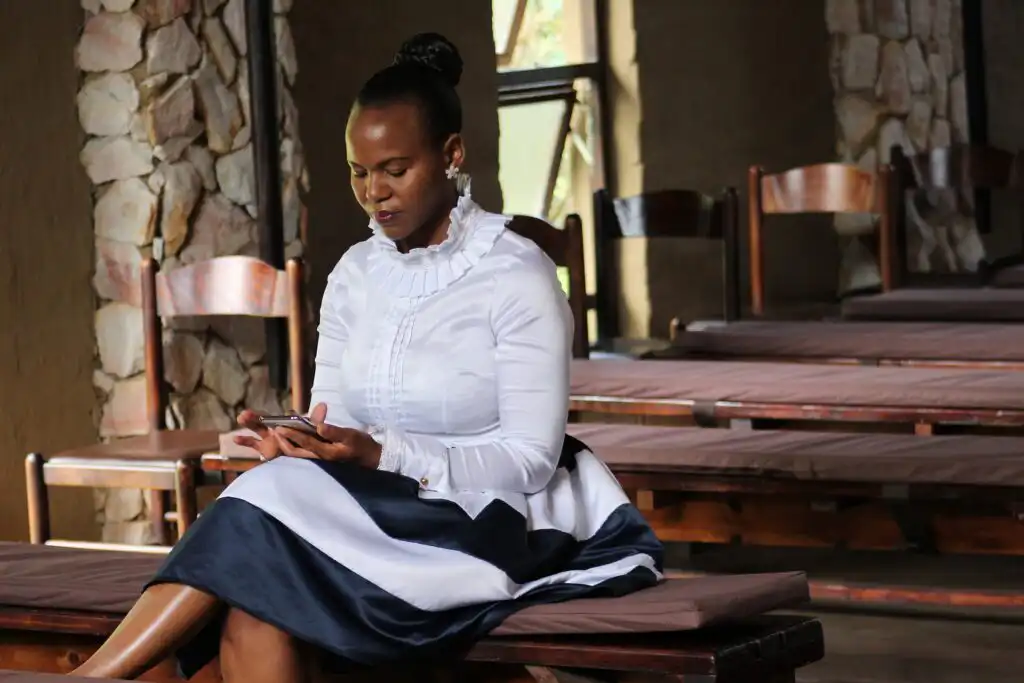
Account ownership is only part of the story – mobile phone gaps remain a major barrier to financial inclusion. Phones are now essential for accessing digital financial services, yet women in LMICs are 9 percentage points less likely than men to own a phone. In Pakistan, just 24% of women have one versus 89% of men. Even in countries with stronger mobile access like India, Egypt, and Ethiopia, gender gaps of 14–25 points persist, limiting women’s use of financial services (more on this in the next section!).
We notice that meaningful gains in women’s account access have occurred where economic growth, digital connectivity, and supportive policies align. But in regions with restrictive norms around women’s work and autonomy, gaps persist despite available tools. Bridging these divides requires bold, holistic approaches that tackle both social norms and system design. These could include:
Ultimately, the goal of women’s financial inclusion is to enhance their agency and overall wellbeing. Financial account access is an important milestone on that journey – but it is not the finish line. Despite impressive gains in account ownership, women’s financial inclusion continues to fall short of its potential because usage remains limited.
Even with equal account ownership in Brazil and India, gender gaps persist in account usage – for example, the respective gaps in digital payments are 9 and 11 percentage points. In India 18% of women’s accounts are inactive versus 11% for men. In LMICs, only 36% of women saved formally last year, versus 43% of men, with gaps as high as 12 percentage points in MENA and Latin America. Women also borrow less formally and are six percentage points less likely to be able to raise emergency funds quickly.
These statistics are striking, but to change them we need to understand why women’s usage lags men’s usage. A key driver of usage gaps is the intersection of digital access and economic participation. The gender gap in smartphone ownership — wider than for basic phones and spanning income levels — limits women’s ability to use digital financial services. As smartphones become essential tools for using financial services, this digital divide is a growing constraint. Usage also mirrors labor force participation – in India, high account access for women hasn’t translated into high usage due to persistent phone and employment gaps. In contrast, countries like Kenya, where digital and economic inclusion align, show higher usage among women.
Getting to higher usage AND equipping women with greater agency over their financial lives will require a fundamental shift – we need to move away from fragmented efforts and towards a focus on scaling financial services that can directly support women’s lifecycle and livelihoods. We suggest four priority areas for action:
The Global Findex 2025 shows how women’s financial inclusion is improving and where gaps remain. The next frontier is not just about ensuring account access, but also increasing account usage and in doing so, increasing women’s agency and wellbeing. To get there, we must move innovation for women to scale, confront social norms head-on, and better connect financial services to women’s economic lives.

Tailored B2B information solutions. We collect and integrate vital intelligence, empowering your growth strategies and competitive edge. Accelerate your pathway to success.